
Fendi Needlework Baguette
Crafted Charm or Luxury Labor Trap?
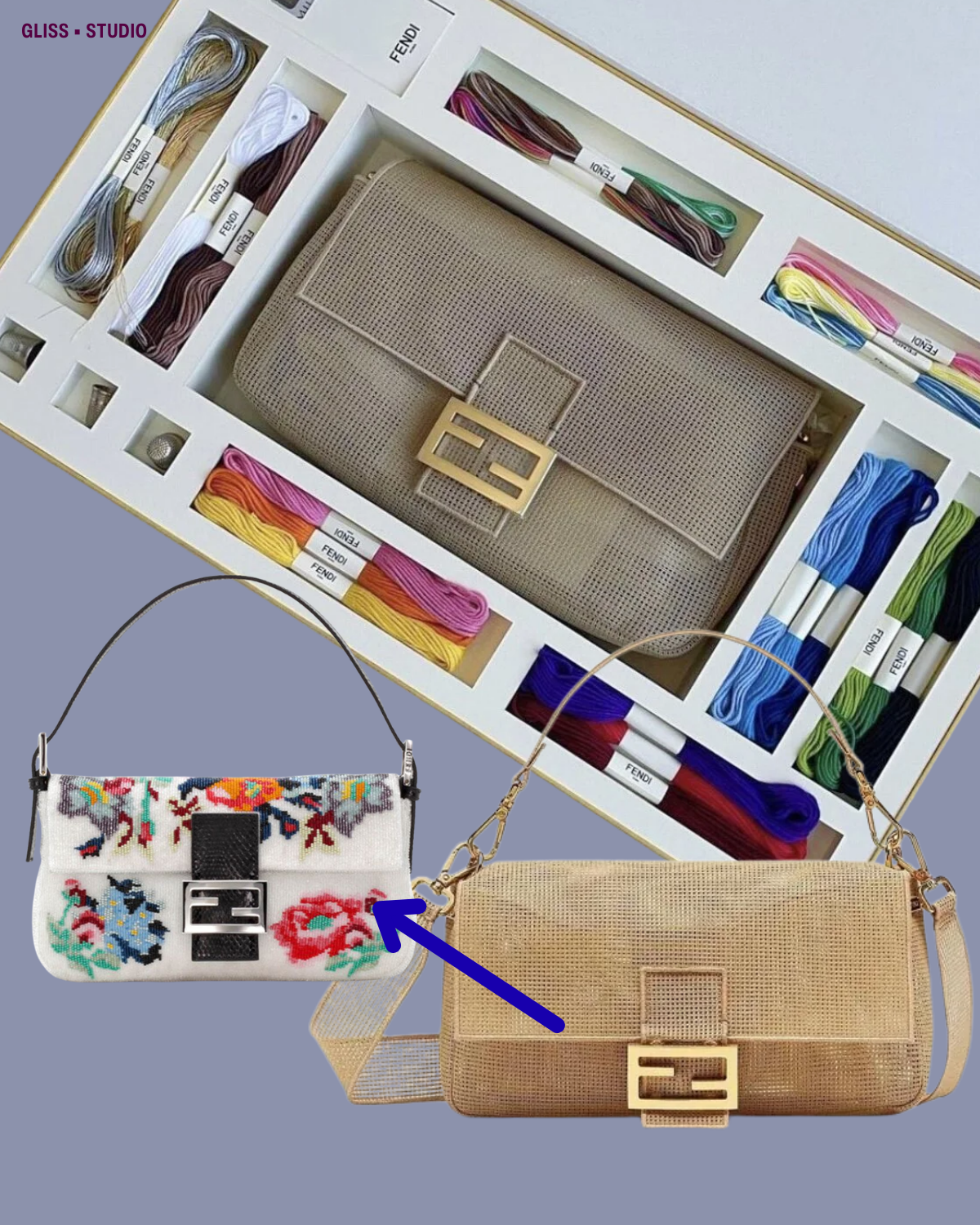
$3,890 to stitch your own status.
Craft or con? / gliss•studio / @fendi
The concept captivates, yet the $3,890 price tag demands scrutiny.
As a needlework enthusiast, I was excited when I first heard about Fendi's needlework Baguette kit. A chance to craft my own version of an iconic bag? Sign me up.
Then I saw the price.
My excitement evaporated. The number wasn't shocking—this is Fendi, after all. But it fundamentally changed what I thought the kit was about.
The Perception Shift
Before knowing the price, this seemed tailor-made for skilled crafters eager to personalize a high-fashion icon.
The $3,890 reality shifts it: Who's the buyer? Time-rich elites, heir/ess splurges, or affluent artists? As a needlework lover, I'd dive in for the uniqueness—but unskilled buyers risk investing in closet-bound "junk."
The DIY Luxury Paradox
Here's what makes this fascinating: paying premium prices to do the work yourself.
When Fendi originally launched this needlepoint kit in 2009, it was priced at $995. By 2012, it jumped to $1,430. The 2025 relaunch? Nearly 300% higher than the original—for essentially the same DIY concept.
This dramatic escalation reveals how luxury brands test the limits of what customers will pay for self-assembly experiences. And the math doesn't add up when you consider the hidden costs of DIY.
When you factor in the value of your time, physical toll, and potential quality issues, fully assembled items often provide superior overall value.
So what are you really paying for?
The Narrative Gap
The problem isn't the concept itself. The problem is craftsmanship without a compelling narrative.
Fendi hands you needles, thread, and an expensive canvas. No educational infrastructure. No credential. No story that transforms the labor into something meaningful.
Compare this to how other luxury brands approach craftsmanship preservation:
Chanel has acquired or partly funded almost 30 artisan workshops since 1985 to ensure specialty products thrive—from local French weavers and jewelers to embroidery specialists. These measures have strengthened and in some cases saved entire crafts. Chanel fully owns their production and supply chain, allowing them to create for other fashion houses too.
That's authentic craftsmanship preservation.
Enter Bottega Veneta's Academia Labor et Ingenium, which trains 50 students annually with master artisans and guarantees employment. France faces 20,000 unfilled artisan-led jobs. Italy's fashion industry will have 94,000 technical positions left open in the next three years.
Luxury conglomerates like LVMH, Chanel, and Bottega Veneta are investing heavily in craftsmanship academies that offer legitimate training, certification, and guaranteed employment.
Fendi offers you a box of supplies and calls it "Fatto a Mano."
What Would Make This Worthwhile
The value isn't just in owning a unique Fendi bag. The value would be in legitimately earning a credential that proves you've mastered something rare.
A certificate of artisan skill transforms this from expensive home project into something worthwhile. Why? Because it sets you apart from people who just buy pretty and expensive bags—and that's already a niche set of people.
Imagine if Fendi included:
Online masterclasses with actual Fendi artisans teaching technique
A certification program that validates your newly acquired skills
Design competitions where completed bags are featured in campaigns
Artisan collaborations that connect kit buyers with the craftspeople preserving these traditions
These additions would create a narrative that justifies the price and effort involved. They would transform labor into legacy.
The Broader Luxury Trend
The global hyper-personalized luxury goods market is projected to grow from $6B in 2025 to $14.2B by 2033. Yet only 18% of luxury buyers say customization decisively drives purchases.
Among those who've purchased customized fashion, 67% would pay a premium. The disconnect? Brands bet billions on personalization while even splurging customizers need compelling incentives to justify the labor.
Early Fendi DIY kit commentary reveals the dissonance: "I would LOVE to make myself a needlepoint bag one day, but probably not that one at that price." Another calls it "an oxymoron for people with more money than sense."
Early commentary on Fendi's DIY kit reveals this cognitive dissonance perfectly. One needlework enthusiast wrote: "I would LOVE to make myself a needlepoint bag one day, but probably not that one at that price."
Another observed: "It does seem like an oxymoron for people with more money than sense."
The most revealing: "People don't buy Fendi to DIY it…that's too much money to pay if I have to work to finish it."
Even enthusiasts recognize when luxury brands conflate genuine craft with expensive busywork.
The Standards Test
As a strategist and needlework enthusiast, I have standards. And this kit doesn't pass the test.
When luxury brands sell craftsmanship, they need to sell the story that makes the craftsmanship meaningful. The disconnect between labor and narrative unravels the perceived value of luxury goods.
Fendi could have created something that genuinely preserves needlework traditions while offering customers a transformative experience. Instead, they're selling homework with a logo.
The success of ventures like this hinges on creating a compelling narrative that justifies the price and effort involved. Without that narrative, you're left with an expensive box collecting dust.
Cute? Undeniably. But paying a maison to embroider its logo feels like gilded busywork—even for a needlework enthusiast.
When luxury sells craftsmanship without narrative, value erodes.
Where's the disconnect in your brand story? Take our 3-minute questionnaire to shape the next deep dive.